
Whose Line Is It Anyway?
There’s a point where an idea stops being something you are making and starts becoming something you are listening to.
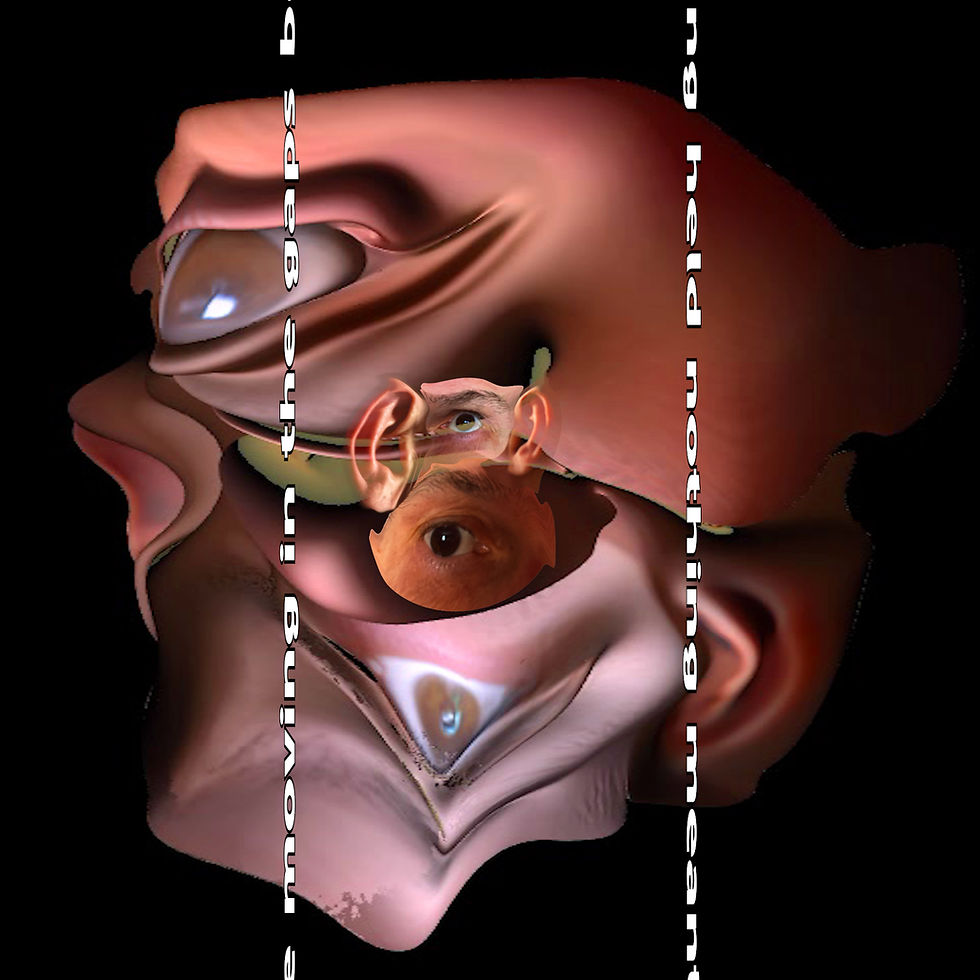
the line began in a simple place — a visual motif from a new logo. An eyes/ears figure. Something halF-symbol, halF-presence … err, halF unusuaL. At first it was just an image: a way of suggesting perception, attention, awareness. They’re also my eye and ears - in all the wrong places - that puts me more personally on the line …
But it didn’t stay still as an image for very long.
It began to feel less like something to look at, and more like something that might be looking back — or perhaps listening back.
That shift feels important … perhaps even more than it sounds.
From the inside, eyes and ears are not neutral instruments. They don’t simply receive the world; they actively shape what the world is, or can appear, to be. We tend to locate identity in thinking, but most of what we are is already formed before thought arrives — filtered, selected, ‘composed’ by sense. Who exactly is in there?!
Thinking often arrives later, as commentary.
And so the question began to shift:
What if this eyes/ears figure thingy could actually speak?
Not as a metaphor. Not as branding. But as something that might express itself through sound. Perhaps even sing.
At that point, ownership starts to blur a bit.
Because once something begins to “speak back”, it’s no longer entirely clear who is speaking.
The music started to organise itself around this ambiguity. Not narratively in a strict sense, more as recurrence — phrases returning under altered conditions. The same lyrics reappearing across different sonic environments: different tempo, different textures, different emotional weather.
Almost like a set of utterances that don’t wholly belong to a single voice anymore; they circulate through several.
There’s a loose precedent for this, though rarely foregrounded in contemporary work. Hymns and carols sometimes carry it — the same lyrics re-tuned across generations, surviving through variation. Stability through repetition, through transformation.
In the line, that idea became the underpinning.
If the same words appear in different sound environments, are they even the same statement? Or do they become something else each time — shaped by the conditions of listening itself, at least partly?
At that point, the “line” in the line stops behaving like a boundary. It becomes process: something redrawing itself when crossed.
And the eyes/ears thing begins to make a different kind of sense: halF symbol of perception, but also a kind of impossible listener. Something made of sensing itself. Some thing witnessing sound, but being formed by it at the same time.
Which brings us back to the title.
Whose Line Is It Anyway?
Once the work starts to speak, the question of authorship becomes unstable. The line between making and hearing, intention and reception, begins to blur.
The piece doesn’t get to resolve that ambiguity. It simply sits inside it.
Is that the point?
A line is really only a line whilst it separates things cleanly; cutting whatever in halF …
Once you listen closely enough, it starts to move.
And once it moves, it’s no longer entirely clear whose it ever was.
the line crosses over first thing Friday …


Comments